Learning Outcomes
i. Define protists and understand their polyphyletic origin
ii. Recognize the diverse characteristics and classifications of protists
iii. Appreciate the ecological importance of protists in various ecosystems
iv. Understand the challenges in studying protists due to their diversity and complexity
Protists:
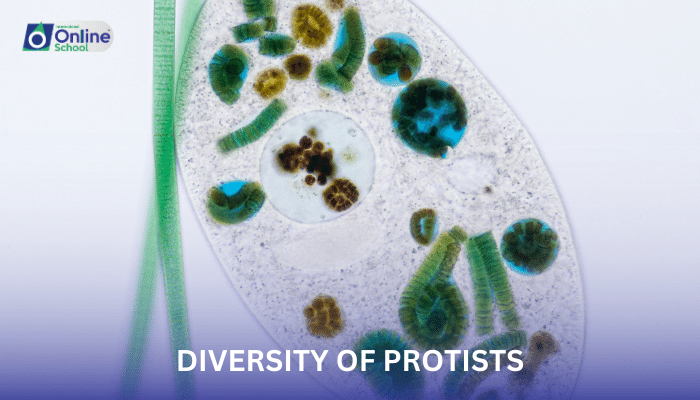
Protists, a diverse group of eukaryotic organisms, represent a fascinating chapter in the story of life. They are often referred to as "the catch-all" group, encompassing a wide range of single-celled and multicellular organisms that do not fit neatly into the kingdoms of plants, animals, or fungi.
i. Polyphyletic Origin of Protists
The term "protist" was originally used to describe any organism that was not an animal, plant, or fungus. However, over time, it has become clear that protists are not a single, unified group. Instead, they represent a diverse collection of organisms that have evolved from different lineages. This polyphyletic origin of protists makes them a challenging group to study and classify.
ii. Diversity of Protists
Protists exhibit an incredible range of forms, lifestyles, and modes of nutrition. They can be found in virtually every environment on Earth, from the depths of the ocean to the tops of mountains. Some protists are photosynthetic, producing their own food from sunlight, while others are heterotrophic, obtaining their food from other organisms.
iii. Classifying Protists
Classifying protists is a complex task due to their diverse characteristics and evolutionary relationships. Traditional classification systems have relied on morphological features, such as cell shape, organelles, and mode of locomotion. However, with advances in molecular biology, it has become clear that these morphological features can be misleading, and new classification systems based on genetic data are being developed.
iv. Ecological Importance of Protists
Protists play essential roles in various ecosystems. They are primary producers, forming the base of many food chains. They are also consumers, decomposers, and symbionts. Protists are involved in nutrient cycling, nitrogen fixation, and the production of oxygen.
v. Challenges in Studying Protists
Studying protists poses unique challenges due to their diversity, small size, and often microscopic nature. Many protists are difficult to observe and cultivate in the laboratory, making it challenging to study their biology and interactions. Additionally, their complex life cycles and interactions with other organisms make them difficult to study in their natural environments.
Protists are a diverse and fascinating group of eukaryotes that play essential roles in various ecosystems. Their polyphyletic origin and complex life cycles make them a challenging group to study, but with advances in molecular biology and ecological research, we are gaining a deeper understanding of their biology and their impact on the world around us. As we continue to explore the microbial world, we can expect to uncover even more of the remarkable capabilities and potential applications of protists.
